
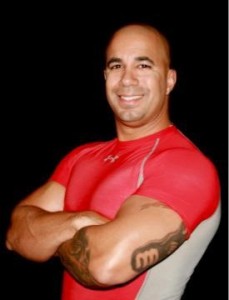
Who I Am (The Short Version)
I’m Ron. I’ve been lifting since I was 17. I’ve been coaching other people since 2015. I’ve been part of the PowerandBulk community since the original forum days, back when this site was a place where serious lifters argued about training in long threads at 2am.
My background is in powerlifting and grip strength. My current work is helping regular people — office workers, parents, guys in their 40s who want to feel strong again, women who want to lift heavy and stop being told they shouldn’t — actually get strong. Not “tone.” Not “shape.” Strong. The kind of strong where you can carry your groceries, deadlift twice your bodyweight, hang from a pull-up bar without your hands giving out, and feel like your body is on your side instead of fighting you.
I write about how to do that. I also built a program called The Foundation 5×5 – STRENGTH FIRST approach for regular people who want to start. I run training consultations with clients on Zoom. I co-author the 30-Day Anabolic Alchemy course with the PowerandBulk team — our protocol for optimizing testosterone and HGH naturally through training, nutrition, sleep, and supplementation.
If you’ve read anything on this site about strength training, grip work, the “strength first” philosophy, or some supplements reviews there’s a good chance I wrote it.
How I Got Here
I didn’t grow up wanting to be a coach. I grew up wanting to be strong because I was the smallest kid in my class through most of high school. I started lifting at 17 in a garage gym a friend’s dad let us use. I had no idea what I was doing. I did curls. I benched. I avoided squats because they were hard and I didn’t know how to do them. For two years I made almost no progress.
What changed everything was meeting a guy named Frank at a commercial gym in 2003. Frank was in his 50s, deadlifted in the high 500s at his bodyweight, and had competed in regional powerlifting meets through the 80s and 90s. He’d trained under coaches in the old-school powerlifting community — guys whose names I didn’t recognize at the time but later realized were legitimate names in the sport. Frank watched me do half-rep squats with too much weight for about a week before he came over and said, “You’re doing all of this wrong, and if you let me, I’ll teach you how to do it right.”
That conversation rewrote my training. Over the next four years, Frank taught me how to actually squat, deadlift, bench, and press. He taught me the difference between training and exercising. He taught me about programming, periodization, autoregulation — although he never used those words. He used phrases like “stop being a hero” and “do the program, don’t decorate it.”
Most of what I know about strength training came from him, and from the lifters he introduced me to over those years. By 2007 I was deadlifting over 500 pounds at 185 bodyweight. By 2008 I’d started getting involved in the early online powerlifting community, which is where I found PowerandBulk.
The PowerandBulk Forum Years
If you were around in the late 2000s and early 2010s, you might remember the PowerandBulk forum from back when it was active. It was one of the better strength training communities online — not the biggest, but the signal-to-noise ratio was excellent. Real lifters posting real numbers, real programming discussions, real arguments about whether Starting Strength or 5/3/1 was better for a beginner. Lyle McDonald was a regular contributor. So were a handful of other coaches and writers whose work I still respect.
I joined the forum in 2009. Spent years there — answering questions, posting training logs, arguing about meal frequency and bulking strategies, helping newer guys figure out their first programs. A lot of what eventually became my coaching philosophy was sharpened in those threads. You can’t post bad advice on a forum full of strong people without getting corrected fast, and that pressure made me a better thinker about training.
Some of the articles I wrote during that period are still on the site, mostly in the grip strength section. The grip strength series — hand and wrist anatomy, hand grippers, nail bending, pinch grip work, wrist work, supporting hand strength, and hand health — was largely my contribution. Grip became a specialty of mine because it was a gap nobody else was filling well, and because I’d messed up my own hands enough times to know what worked and what didn’t.
The forum eventually wound down. The site evolved into what it is now — an ecommerce store and content hub. But the philosophy didn’t change. We’re still trying to be the place where regular people can find honest information about training and supplementation, written by people who actually train and actually use what they recommend.
What I Do Now: Coaching Regular People to Get Strong
I’ve been coaching clients since 2015. Started with a few friends and friends-of-friends. By 2018 it was a real practice. Today I work with clients ranging in age from 22 to 67. About 60% men, 40% women. Most are in their 30s and 40s. Almost none are competitive athletes. They’re regular people with regular lives who want their bodies to feel and work better.
The clients I’ve worked with over the years inform almost everything I write. When I talk about a client named Marcus or Joanna or Gary in my articles, those are composites of real people I’ve coached — names changed, specifics blurred for privacy, but the situations are real. I’ve kept a running document of client outcomes since 2009, started as a spreadsheet, became something messier over the years. Patterns emerge when you watch a few dozen people go through similar programs. That’s where most of my actual expertise comes from. Not theory. Patterns.
My coaching philosophy comes down to four things:
1. Strength first, everything else second. The principle I’ve written about extensively. Build the strength base before you chase aesthetics, conditioning, or anything else. Full article here.
2. Train the basics until they’re not basic anymore. Most people quit basic programs too early because they get bored, not because the program stopped working. I keep clients on simple programming for longer than most coaches will, because simple programming run consistently outperforms complex programming run sporadically. Every time.
3. Recovery and nutrition are 60% of the equation. The training is the easy part. What people do in the 23 hours outside the gym determines whether the training actually produces results. Sleep, protein, calories, hormonal environment — all of it matters more than the program itself.
4. The body works as a system. Strength training drives hormonal response. Hormonal environment drives recovery. Recovery enables more training. Nutrition feeds all of it. You can’t optimize one piece while ignoring the others. That’s the philosophy behind the Anabolic Alchemy course — addressing all of it together, not in isolation.
Credentials & Training
- ISSA Certified Nutrition Coach (International Sports Sciences Association)
- 10+ years of one-on-one and consultation-based coaching experience (since 2015)
- Trained under regional-level powerlifting coaches with backgrounds in the old-school competitive powerlifting community
- Original member of the PowerandBulk legacy forum community (since 2009)
- Lead author of the PowerandBulk grip strength article series
- Co-author of the 30-Day Anabolic Alchemy course — PowerandBulk’s flagship protocol for naturally optimizing testosterone and HGH
- Creator of The Foundation 5×5 — a strength-first program for regular people
What I’ve Written for PowerandBulk
Here’s where most of my published work lives on the site. If you’re new to PowerandBulk and want to know what I actually think about training, supplementation, and getting strong, start here.
The Strength First Series (For Regular People)
The philosophy I’ve spent my career refining, written for the average person — not for competitive athletes or grip sport specialists. This is the work I’m most proud of.
- Strength First: The One Rule That Changes Everything
- The Foundation 5×5: My Strength-First Program for Regular People
- Why Your Grip Gives Out Before Your Back Does
The Grip Strength Foundation Articles
The original grip strength series I helped build out in the forum era. Still some of the most comprehensive grip strength resources online for serious lifters.
- Hand & Wrist Anatomy
- A Guide to Hand Grippers
- Bending Nails for Grip Strength
- Thumb Strength & Pinch Grip Exercises
- Wrist Strength: Levering, Sledgehammer, Curls & Rollers
- Supporting Hand Strength: Thick Bar Training
- Hand Health for Stronger Grip
The Anabolic Alchemy Course
The course I co-authored with the PowerandBulk team. A 30-day protocol for naturally optimizing testosterone and HGH through training, nutrition, sleep, and targeted supplementation. This is the deeper companion to everything I write about strength training, because eventually the conversation has to include hormones — especially for guys over 35.
→ 30-Day Anabolic Alchemy Course
What You Can Expect From Me
I’m not interested in selling you anything you don’t need. I write the way I’d talk to a friend who showed up at my gym asking for help. Direct, occasionally blunt, always honest about what I’ve gotten wrong over the years.
If a supplement isn’t worth taking, I’ll say so. If a popular program is overhyped for regular people, I’ll tell you. If I made a coaching mistake with a client and it took me six months to figure out the fix, I’ll write about it so you don’t repeat my mistake.
I try to give specific numbers, specific protocols, specific dosages, specific timings — not vague advice. When I say “rest 3 minutes between sets,” I mean 3 minutes. When I say “start with 95 pounds on the squat,” I mean 95 pounds. Vague training advice is useless. People need actual instructions.
I keep things accessible. I don’t expect you to know what conjugate periodization is or what “GPP” means. When I use a term that an average reader wouldn’t know, I explain it on the spot. Strength training has too much jargon. I try to use less of it.
Work With Me / Get In Touch
I take a limited number of consultation clients each year. Most of my work is Zoom-based — programming review, training feedback, nutrition guidance, troubleshooting stalls. I don’t do in-person training anymore. The consultation format works better for the kind of clients I tend to attract: working adults who train at their own gym and need a coach who can help them think clearly about their training, not someone standing next to them counting reps.
You can book a consultation from this link.
If you want to ask a question, suggest an article topic, or get in touch about consultation availability:
Email: ron@powerandbulk.com
Community: PowerandBulk Facebook Group
I read every email. Replies might take a few days because I’m usually either training, writing, or with my family. But I do read them.
One Last Thing
The reason I keep writing — instead of just coaching clients privately and calling it a day — is that there’s a lot of bad information out there about training and supplementation. Most of it is written by people who don’t actually train, don’t actually coach, and don’t actually use what they recommend. That’s how regular people end up wasting years on programs that don’t work, supplements that don’t do anything, and advice from people whose actual qualifications are “made it onto the first page of search results.”
PowerandBulk has been around long enough — and the team behind it has enough actual experience — that we can do better than that. We’re trying to be the place where the information is honest, the recommendations are tested, and the writers are people you’d actually want to learn from.
If you’ve made it this far down the page, thanks for reading. Now go train.
— Ron Males
Strength Coach | ISSA CNC | PowerandBulk.com
At PowerandBulk.com, Ron also contributes supplement reviews to PowerandBulk.com on occasion — drawing on his nutrition coaching background to cut through the marketing noise and give readers a straight read on what’s worth taking and what isn’t