Workouts
Strength First: The One Rule To BodyBuilding That Changes Everything
I’m going to tell you something that took me an embarrassingly long time to actually believe, not just say.
I used to program clients the way I thought serious trainers were supposed to program clients. Chest day, back day, arms day. Supersets. Drop sets. Isolation work that looked impressive written on a whiteboard. A guy named Marcus, 34, office job, came to me in 2011 wanting to “get in shape.” I gave him a split routine with seven exercises per session. He stuck with it for four months. At the end of four months, he could curl more, looked roughly the same, and pulled something in his lower back during a cable row.
He quit. I told myself it was commitment issues. It wasn’t.
What Marcus needed — what almost every person who walks into a gym needs and doesn’t get — was one thing first. Strength. Not a program. Not a split. Not a supplement stack. The foundation that everything else is built on. I’d been building him a house starting with the wallpaper.
That’s the mistake I see constantly, and it’s the mistake this whole series is designed to fix.
What “Strength First” Actually Means
StrongFirst as a formal organization was Pavel Tsatsouline’s (the Russian-American coach who brought kettlebell training to the West and founded the StrongFirst certification system) way of putting a name to something serious coaches had understood for decades: strength is the master quality. Build it first, and almost everything else gets easier. Cardio improves. Body composition shifts. Joint stability increases. Recovery speeds up. Athleticism — whatever that means for your life — goes up.
Don’t build it first, and you’re constantly trying to construct things on a foundation that isn’t there.
But here’s what I want to be clear about: I’m not writing this for competitive powerlifters. I’m not writing it for guys who’ve been training for ten years and want to optimize their conjugate periodization (a method of organizing training that alternates between maximum effort and dynamic effort days, popularized by Westside Barbell). I’m writing it for regular people — the Marcus types, the people who want to look better, feel better, live longer, be able to carry their groceries without their back going out. For THOSE people, the “strength first” rule matters more than it does for anyone else. Because those people are the ones who most often get pointed in the wrong direction.
The Way Most Regular People Train (And Why It Doesn’t Work)
I’ve trained clients ranging from 19-year-old college students to a 61-year-old retired postal worker named Gary who wanted to be able to hike with his grandkids without his knees complaining the whole time. Across all of them — and I’ve kept a running document of client outcomes since about 2009, which started as a spreadsheet and turned into something considerably messier — the pattern is consistent.
Regular people come in wanting results. They want the aesthetic outcome, or the health outcome, or the performance outcome. And because they want that outcome, not the process, they gravitate toward whatever looks like the fastest path to it. Which usually means:
High-rep isolation work because “toning” is a thing they’ve heard of. Cardio-heavy programs because they want to lose weight and cardio burns calories. Whatever the fitness influencer they follow is doing, which is usually advanced athlete programming that has no business being near a beginner. Some combination of all three, changing every six weeks because they read that muscle confusion is important.
None of this builds the base. None of this makes them actually stronger in any meaningful way. And so six months in, they’re not dramatically different, they’ve probably bounced between three or four different programs, and they’ve started to assume the problem is their genetics or their age or their metabolism. The problem is the order of operations.
What Happened When I Actually Applied This
After Marcus, I changed how I programmed new clients. Not overnight — I still made mistakes for another couple years — but I started prioritizing compound movements and progressive overload (adding weight or reps systematically over time, which forces your body to keep adapting) above everything else. The split routines went in the drawer. We squatted. We pressed. We pulled. We tracked the numbers week over week.
A client named Derek, 29, came to me in 2013. Skinny-fat, which sounds harsh but is the accurate term — not overweight by the scale, but carrying more fat than muscle, soft in the middle, no real strength base. He’d been going to the gym for two years and had almost nothing to show for it because he’d spent two years doing exactly what I described above.
I put him on a simple three-day-a-week program. Squat, press, deadlift. Nothing else for the first eight weeks except pull-ups and some ab work. He wanted to add more. I told him no. He thought I was undertraining him. He sent me a text — I still have it somewhere — that said something like “is this really it? feels too easy.”
Three months later he’d put 45 pounds on his deadlift, 30 on his squat, and his body composition had shifted noticeably. Not because we’d done anything clever. Because we’d built the base first, and the base was doing what it was supposed to do.
That’s not a coincidence. I’ve seen that same progression — confused beginner does compound strength work consistently for 12-16 weeks, looks noticeably different, performs noticeably better — probably forty or fifty times now. The mechanism isn’t mysterious. Compound heavy lifting recruits more muscle mass per movement. More muscle mass means more metabolic demand. More metabolic demand means better body composition even when the diet isn’t perfect. And the strength gains themselves create a feedback loop: people who see their deadlift go up every week keep showing up to train. People who don’t see measurable progress don’t.
The Part I Got Wrong For Years
I want to be honest about a mistake I made, because it’s relevant and because I see other coaches still making it.
For a long time, when I said “strength first” to clients, I meant it for training. I didn’t think nearly enough about what was happening outside the gym. And this is where I failed a client named Joanna, 41, who came to me after having her second kid and wanting to feel like herself again.
Joanna was doing everything right in the gym. She was stronger after two months than she’d been in years. But she was tired all the time, recovering slowly, and her body composition wasn’t shifting the way it should have been given the work she was putting in. I kept adjusting the program. Tried deload weeks. Tried slightly different rep ranges. Spent weeks fiddling with training variables that weren’t the problem.
The problem was that Joanna was sleeping five hours a night, eating about 80 grams of protein a day, and running on cortisol and coffee. Her hormonal environment was working against everything we were building in the gym. The training was right. The foundation underneath the training was wrong.
That experience restructured how I think about “strength first.” It’s not just a training principle. It’s a whole-system principle. You build strength in the gym, yes. But you also have to build the physiological environment where strength training can actually produce results. Sleep. Nutrition — especially protein, and especially enough total calories to support the adaptation you’re asking your body to make. Hormonal health, which for most adults over 35 is doing something you need to pay attention to, not just assume is fine.
The training is maybe 40% of it. The other 60% is the conditions under which the training happens.
Why Strength Is the Master Quality (The Non-Complicated Version)
There’s a longer physiological explanation for all of this. I’ll spare you most of it and give you the part that matters.
When you build real strength — through heavy compound movements, progressive loading, adequate recovery — you’re not just building muscle. You’re building the entire system that supports muscle. Connective tissue gets stronger. Your nervous system becomes more efficient at recruiting muscle fibers. Bone density improves. Your body gets better at utilizing nutrients, particularly glucose. Insulin sensitivity (how effectively your body responds to insulin, the hormone that moves sugar from your blood into your cells — when this is high, your body processes carbohydrates efficiently; when it’s low, you store more as fat) improves. Your hormonal profile shifts in a direction that supports further adaptation.
That last part is significant. Heavy compound strength training is one of the most reliable natural drivers of testosterone and growth hormone. Not marginally — meaningfully. Deadlifts, squats, heavy pressing: the body’s hormonal response to these movements is real, and it compounds over time. This is why the same base of training that makes you stronger also tends to make you leaner, makes your sleep better, makes your energy more consistent. It’s not separate systems responding to separate inputs. It’s one system being optimized from one direction.
Cardio first doesn’t do this. Isolation work doesn’t do this. Six-days-a-week chest and arms doesn’t do this.
Strength work does. So you do that first.
What This Looks Like In Practice
I’m not going to write a full program in this article — that’s what the rest of this series is for. But I want to give you the shape of what “strength first” actually looks like for a regular person, because I find that people need to see it before they believe it’s enough.
Three days a week. Full body each session. Four or five exercises, not fourteen. Always a squat pattern, always a hip hinge (movements where the hips drive backward while the spine stays neutral — deadlifts are the most common example), always an upper body press. Everything else is secondary. The program doesn’t change every month. You run it until it stops working, which for most beginners takes longer than they expect.
Jim Wendler’s 5/3/1 system — which I’ve used as a backbone for more client programs than anything else — is built exactly on this logic. The percentages, the wave loading, the “start light and build” philosophy that every impatient beginner hates: all of it is in service of one idea. Get consistently stronger on the movements that matter. Don’t do anything else until that’s happening reliably.
Wendler himself was brutally clear about it in his writing. He’d been a competitive powerlifter, gotten to a point where he hated training, and rebuilt himself by getting ruthlessly simple. Four main lifts. Track the numbers. Add weight slowly. The program he ended up with was, by his own description, almost offensively basic. It works anyway. It works BECAUSE it’s basic, not in spite of it.
Gary — the 61-year-old I mentioned earlier — ran a modified version of this for seven months. At the end of those seven months, he was deadlifting more than he’d ever deadlifted in his life. He hiked a 14-mile trail with his grandkids and his knees were fine. He told me, and I’m paraphrasing because I didn’t write it down: “I spent 30 years doing random stuff in gyms and nothing ever actually changed. This is the first time I feel like I built something.”
That’s the strength first principle working exactly the way it’s supposed to.
The One Thing I Want You to Take From This
If you read this whole article and take one thing: the question to ask about any training or nutrition decision isn’t “does this look good” or “does this burn calories” or “is this what that guy on Instagram does.” The question is “does this make me stronger, or does it support the environment where I get stronger.”
If the answer is yes — keep it. If the answer is no — it might be fine eventually, but it’s not what you need right now.
That filter, applied consistently, changes everything. I’ve watched it change it for Marcus (who came back two years after quitting, by the way — we did it differently the second time, and it worked). I’ve watched it change it for Derek, for Joanna once we fixed the conditions, for Gary and his knees, and for a few dozen others whose progress I’ve been tracking in that ongoing document that started as a neat spreadsheet and is now a chaotic mix of notes and observations that only I can read.
Strength first. Everything else second. The order is the point.

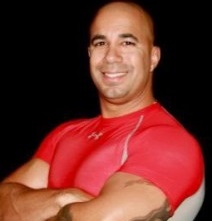
Ron Males is an ISSA Certified Nutrition Coach, strength coach, and longtime member of the original PowerandBulk legacy forum. Coaching clients since 2015, Ron specializes in grip strength training and the StrongFirst/strength-first philosophy - making proven powerlifting principles accessible to regular people. His foundation runs deep: personal training experience, comprehensive research into performance enhancement, testosterone optimization, and muscle building - combined with a working knowledge of biohacking and evidence-based supplementation. Ron is dedicated to cutting through misinformation and giving people straight, reliable information they can actually act on. His interests span herbs, adaptogens, and performance-enhancing compounds - not just for the gym, but for optimizing energy, focus, and output across all areas of life. As an occasional supplement reviewer at PowerandBulk.com, he brings the same no-BS standard to the bottle as he applies to the barbell — drawing on first-hand experience with bodybuilding supplements and a nutrition coaching background to deliver reviews readers can trust. A founding voice on the old forum, Ron continues to shape the training and supplement content that makes PowerandBulk.com what it is today. Read more about him.