Hormones-optimization
Cistanche, Cordyceps, and Pine Pollen: Honest Assessment of the Emerging Adaptogens
- Cistanche tubulosa has the most credible mechanism of the three compounds covered here — specific echinacoside and acteoside content that appears to support LH signaling. The sourcing problem is real and largely unsolved.
- Cordyceps militaris is not the same as sinensis, and most products don’t tell you which you’re buying. The athletic performance data for militaris is more consistent than the testosterone data for either species.
- Pine pollen has the most compelling marketing and the least compelling clinical evidence. The phyto-androgen content is real but the bioavailability argument is where the case falls apart.
- None of these belong in a stack until the foundational minerals — D3, magnesium glycinate, zinc, boron — are established and confirmed via bloodwork. These are B-tier adjuncts. Don’t skip the S-tier foundations to get here.
Sam Reichert sent me an unsolicited literature review on Cistanche tubulosa last fall. Sam is a PhD student in chemistry from Madison — vegetarian, deeply analytical, the kind of client who reads primary sources before he’ll take a recommendation seriously. He’d found the herb through a nootropics forum and wanted to know if I thought the mechanism was credible. His framing was exactly what I’d want from a research-trained client: “The echinacoside content is plausible as an LH support mechanism. The clinical data in humans is thin and the sourcing is a mess. Am I missing something?”
He wasn’t missing much. But the question was worth engaging with, and the conversation led me to pull together my current thinking on this cluster of adaptogens — Cistanche, Cordyceps, and pine pollen — that have been circulating in the testosterone optimization space for the last couple of years with increasing frequency and varying degrees of supporting evidence.
The honest assessment is this: none of them are nonsense, none of them are transformative, and all three have specific conditions under which they may produce meaningful effects and specific conditions under which they won’t. That nuance doesn’t make for good supplement marketing, which is probably why it’s underrepresented in most discussions of these compounds.
Quick Review: Cistanche Tubulosa
A parasitic desert plant with specific phenylethanoid glycosides — primarily echinacoside and acteoside — that appear to support LH pulsatility in animal models and limited human work. The mechanism is plausible. The sourcing is the primary concern: most commercial products are either mislabeled species or under-standardized extracts. Conditional recommendation for men over 45 with confirmed secondary hypogonadism and a clean foundational stack already established.
- Best for: Men 45+ with LH in the low-normal range, looking for gentle endogenous stimulation adjunct
- Dosage I’ve used with clients: 500–750mg of standardized extract (minimum 10% echinacoside) daily; skip products that don’t specify extract standardization
- Cycling protocol: 8 weeks on, 4 weeks off — insufficient long-term data to recommend continuous use
- Would I recommend it: Conditionally, after D3/magnesium/zinc/boron are confirmed adequate via bloodwork
I talked through Cistanche with Joey Savage — a supplement formulator I’ve had on a couple of conversations — and his read was blunt: “The mechanism is real, the human data is preliminary, and 80% of what’s sold as Cistanche is either the wrong species or not standardized to the actives.” That’s the sourcing problem in a sentence. Cistanche tubulosa is not Cistanche deserticola, which is the species most of the traditional use and some of the older research references. Products that don’t specify the species and don’t provide a standardized extract certificate of analysis are buying you a brown powder that may or may not contain meaningful echinacoside content.
Sam, for his part, ran Cistanche for 10 weeks at 750mg daily — standardized extract from a reputable vendor he vetted through the chemistry research side of his training. His free T moved from 10.8 to 12.4 pg/mL. He’s appropriately cautious about attributing that change to the Cistanche specifically, since he was also addressing a vitamin D deficiency during that period. He told me afterward: “The data is confounded. But nothing negative happened, and the subjective signals were slightly positive. I’d call it a conditional B.”
That’s probably where I’d land it too. Conditional B.
Quick Review: Cordyceps (Sinensis and Militaris)
The performance and VO2 max data for Cordyceps militaris mycelium is more consistent than the testosterone data for either species. The traditional Chinese medicine use was Cordyceps sinensis (a parasitic fungus harvested from caterpillars at altitude), but wild sinensis is essentially non-accessible commercially — what’s sold as sinensis is usually mycelium fermented on grain, which has a different active compound profile. Militaris is the more accessible species and has better-documented cordycepin content. Honest moderate take: useful adjunct for aerobic recovery and energy metabolism, less convincing as a testosterone intervention directly.
- Best for: High-volume endurance athletes or clients with fatigue and poor training recovery as the primary complaint
- Dosage I’ve used with clients: 1,000–1,500mg of Cordyceps militaris standardized extract (look for cordycepin content specified), AM dosing
- Cycling protocol: Can use continuously — no evidence of tolerance buildup or suppression; 12 weeks on, assess and continue if response is positive
- Would I recommend it: Conditionally for endurance athletes or men with fatigue as primary complaint; not as a direct T intervention
Andre Whitlock tried Cordyceps specifically. Andre is a 47-year-old sociology professor from Boston — the analytically-minded client who intellectualized his way out of protocols for months before I eventually got him to just run the foundational stack. By the time he added Cordyceps, his T was already at 620 ng/dL from the vitamin D correction and lifestyle work. He wanted something for cognitive energy and training recovery.
He ran Cordyceps militaris at 1,000mg daily for 12 weeks and reported meaningful improvement in what he described as “mental endurance across long lecture blocks.” His training recovery by his subjective report improved. His IGF-1 at the end of the period was at 196 ng/mL, up from 182 — though he’d also been running the 6-12-25 training protocol for four months by that point, which is a confound. He’s now a consistent Cordyceps user. Whether the IGF-1 move is attributable to Cordyceps specifically or to the training stimulus maturing is genuinely unclear.
The mechanism for Cordyceps and hormonal function runs through adenosine and ATP production rather than directly through the HPTA. Cordycepin (3′-deoxyadenosine) appears to enhance mitochondrial efficiency and may reduce oxidative stress in Leydig cells, which could explain modest T support as a downstream effect. It’s indirect and dose-dependent, and most of the compelling in vitro data involves concentrations higher than standard oral dosing achieves. The performance data — VO2 max improvement in trained athletes — is more consistent and better-powered than the T data.
If a client asks me about Cordyceps, my answer is: real mechanism, indirect effect, better evidence for recovery and aerobic performance than for T specifically, and worth trying at 12 weeks if training recovery is a specific complaint. Stack it after the foundational supplements from the supplement tier list are in place and confirmed working.
Quick Review: Pine Pollen
Pine pollen contains measurable androgens — testosterone, DHEA, androstenedione — in the pollen grain. The marketing argument is that this makes it a natural source of bioavailable androgens. The counterargument is that the androgen content per gram of pine pollen is small, oral bioavailability of pollen-encased androgens is essentially nil without cell wall disruption, and the doses required to deliver meaningful androgenic activity would be impractical and potentially suppressive if absorbed. Tincture formulations claim better absorption. The clinical evidence is absent. My honest read: skip it and spend the money on boron.
- Best for: Nobody I’ve found a compelling case for, honestly
- Dosage in the literature: 1–2 tsp powder or 1–2ml tincture — neither delivers convincing androgenic activity in humans
- Cycling protocol: Irrelevant at this evidence level
- Would I recommend it: No — the mechanism is more compelling than the bioavailability allows for in practice
Doug Sterling tried pine pollen. Doug is 52, an executive recruiter from Atlanta who came to me at a low point — post-divorce, 30 lbs heavier than he wanted to be, T at 310. He’d seen pine pollen discussed in a men’s health forum as a “natural testosterone source” and was drawn to the idea of something simple. I let him run it for 8 weeks while we worked on the foundational lifestyle stuff simultaneously, partly because he needed to feel like he was doing something and partly because I was curious whether he’d notice anything.
He didn’t. His T moved 40 points over that period — consistent with what you’d expect from the lifestyle interventions we were running simultaneously, not from pine pollen. When I told him that the phyto-androgen content in pine pollen faces a fundamental bioavailability problem — that the pollen cell wall prevents meaningful absorption of its androgen content without specialized processing — his response was characteristically direct: “So I paid for expensive forest food.”
Essentially, yes. The pine pollen narrative is compelling because it’s real at the level of the plant — pine pollen does contain androgens, pine trees do use them for their own reproductive biology, and it is technically accurate to say pine pollen is “a natural source of testosterone and DHEA.” What the marketing skips is that eating a compound and absorbing it at physiologically relevant concentrations are different things. The androgen content in a standard pine pollen dose, even with tincture processing, doesn’t translate to meaningful systemic androgenic activity in humans based on the available evidence.
Tincture advocates argue that sublingual absorption bypasses the pollen wall problem. That’s theoretically possible but unverified in human clinical data. Joey’s take when I brought this up: “The concept is more interesting than the evidence. I wouldn’t put it in a product I wanted to stand behind.”
Where These Compounds Fit in a Rational Stack
The three basic supplements — vitamin D3 with K2, magnesium glycinate, zinc if deficient — are S-tier. They are the foundational stack, confirmed by bloodwork, that should be in place before anything in this article is considered. Adding Cordyceps or Cistanche to a stack that hasn’t addressed a vitamin D deficiency or magnesium gap is solving for the wrong variable.
Adaptogens like Cordyceps and Cistanche are B-tier adjuncts for men who have already optimized the foundational inputs and are looking for incremental gains. They are not transformative. They are not replacements for sleep, training structure, or micronutrient adequacy. At PowerandBulk.com, I’m careful to sequence these correctly in the program — foundational corrections first, then lifestyle optimization, then evidence-backed adjuncts like ashwagandha KSM-66 and shilajit (covered in the shilajit review), then the more conditional options like Cistanche and Cordyceps.
Pine pollen doesn’t belong in the stack at this evidence level. Not because the concept is stupid — the concept is actually interesting — but because the bioavailability problem is unresolved and cheaper, better-evidenced options exist at every tier above it. Boron at $8 a month moves free testosterone via SHBG reduction in ways that are documented and reproducible. Pine pollen at $30 a month does not have that evidence base. Choose accordingly.
Sam’s assessment of Cistanche — conditional B, sources matter enormously, don’t bother until D3 and magnesium are handled — is where I’d leave all three of these compounds. The research is interesting enough to follow. It’s not compelling enough to chase before the fundamentals are confirmed.
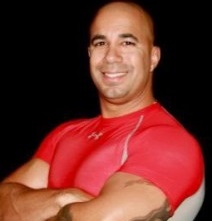
Ron Males is an ISSA Certified Nutrition Coach, strength coach, and longtime member of the original PowerandBulk legacy forum. Coaching clients since 2015, Ron specializes in grip strength training and the StrongFirst/strength-first philosophy - making proven powerlifting principles accessible to regular people. His foundation runs deep: personal training experience, comprehensive research into performance enhancement, testosterone optimization, and muscle building - combined with a working knowledge of biohacking and evidence-based supplementation. Ron is dedicated to cutting through misinformation and giving people straight, reliable information they can actually act on. His interests span herbs, adaptogens, and performance-enhancing compounds - not just for the gym, but for optimizing energy, focus, and output across all areas of life. As an occasional supplement reviewer at PowerandBulk.com, he brings the same no-BS standard to the bottle as he applies to the barbell — drawing on first-hand experience with bodybuilding supplements and a nutrition coaching background to deliver reviews readers can trust. A founding voice on the old forum, Ron continues to shape the training and supplement content that makes PowerandBulk.com what it is today. Read more about him.